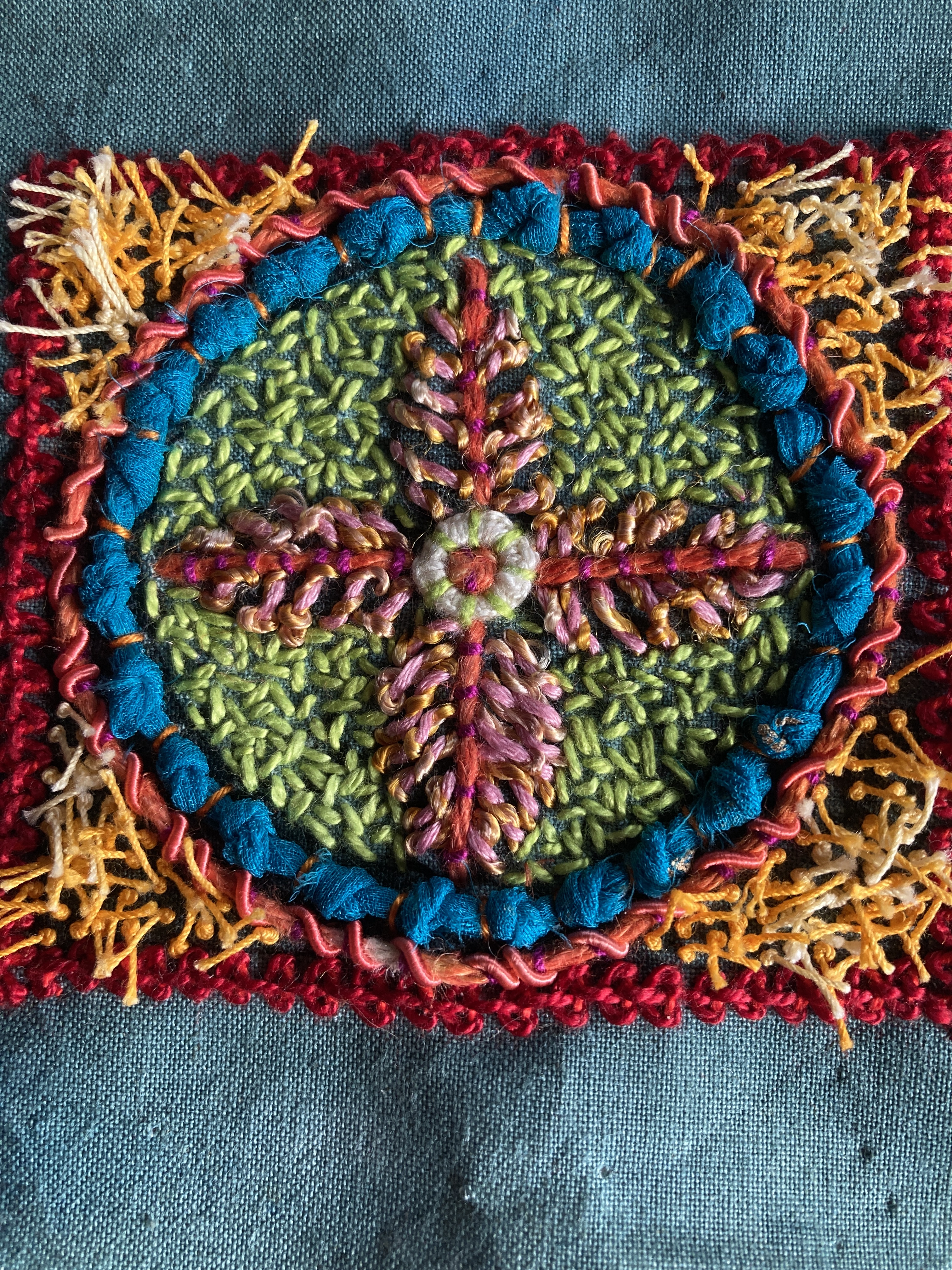
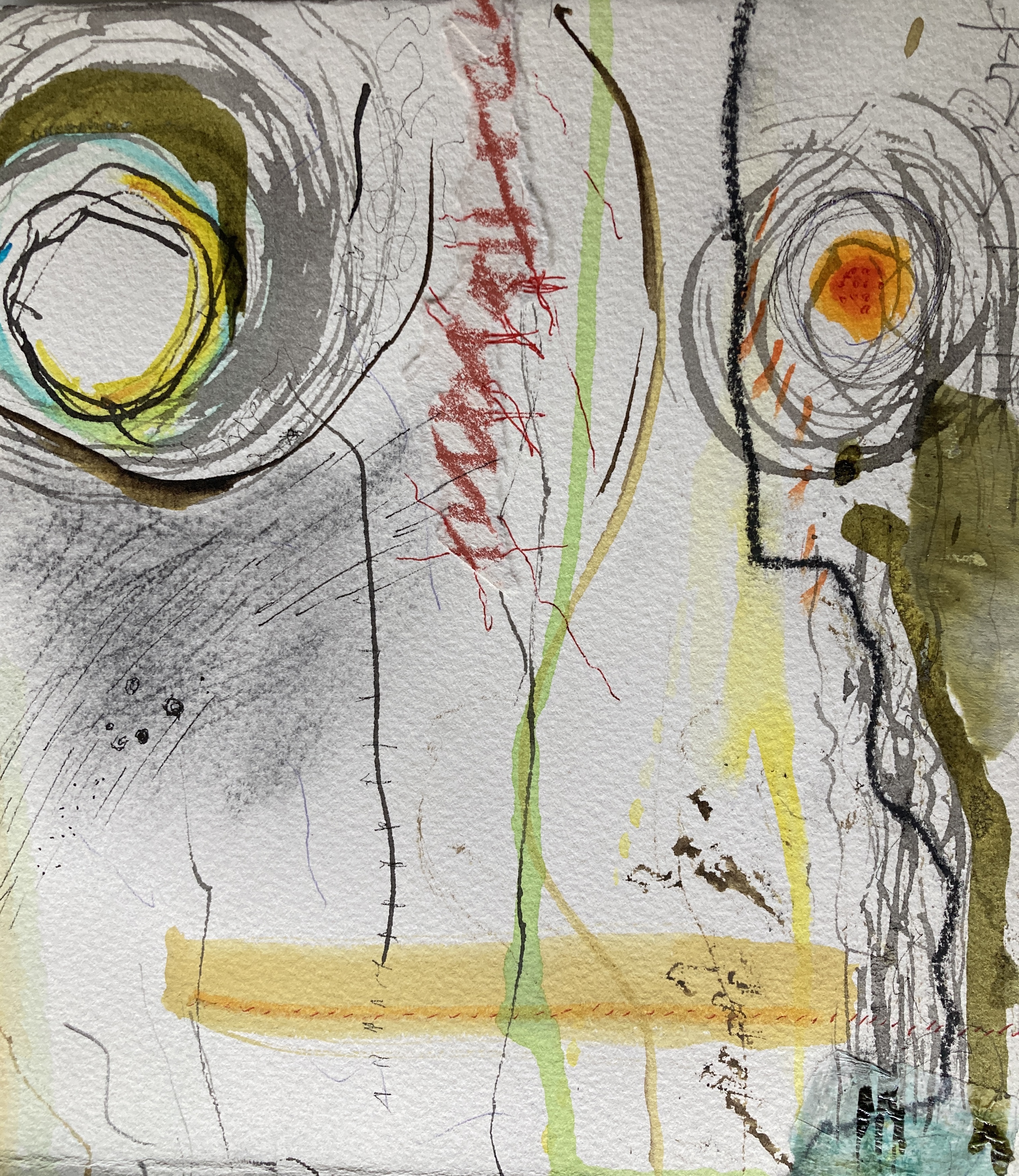
Hundertwasser was an austrian artist with an individual style; bright, intense colour and quirky images of line, spirals and eyes meandering around organic shapes. These characteristics together with an imaginary walk through familiar places will form the basis of spontaneous design to translate into a small piece of stitching, with raised areas that could become a textile panel.
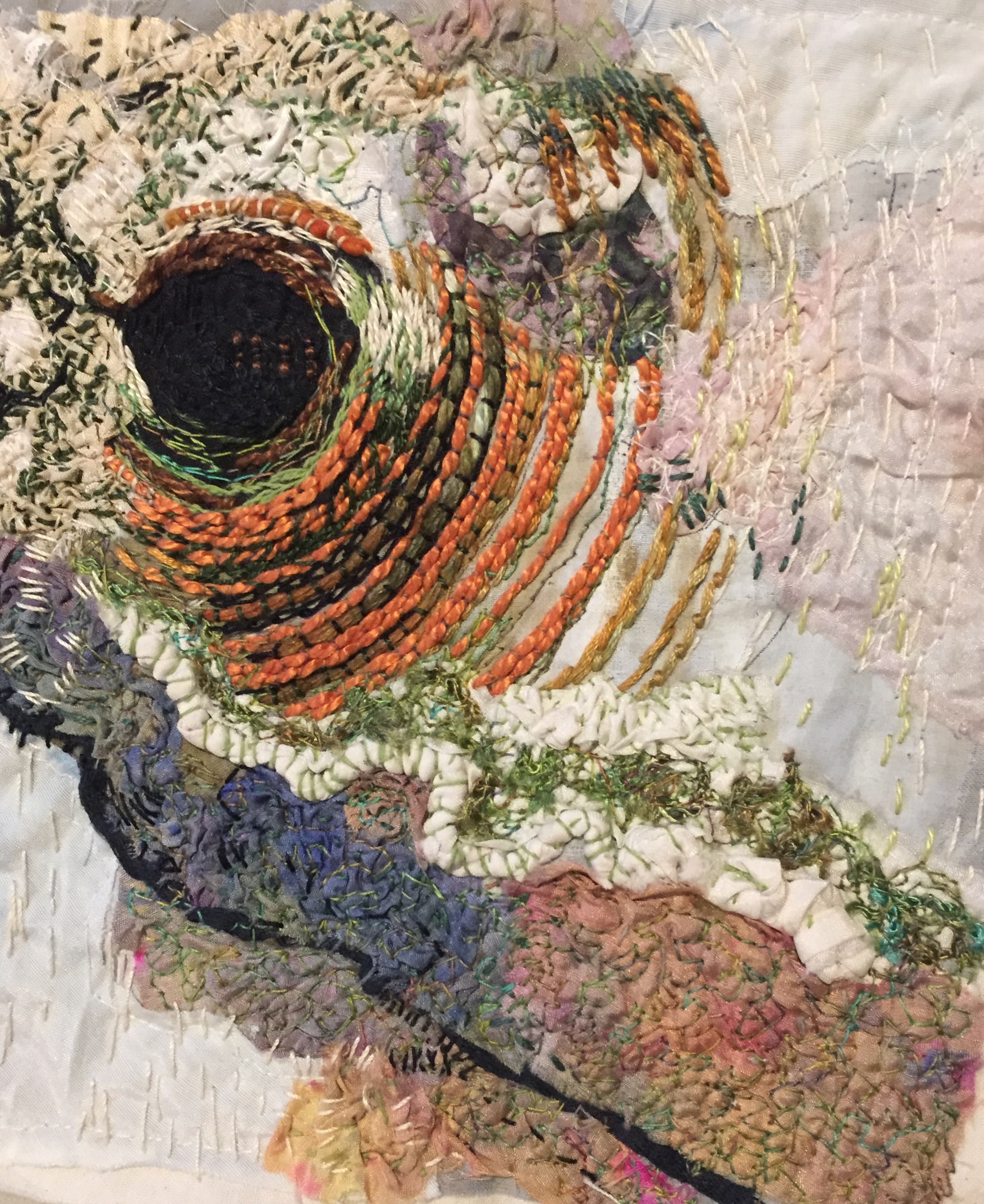
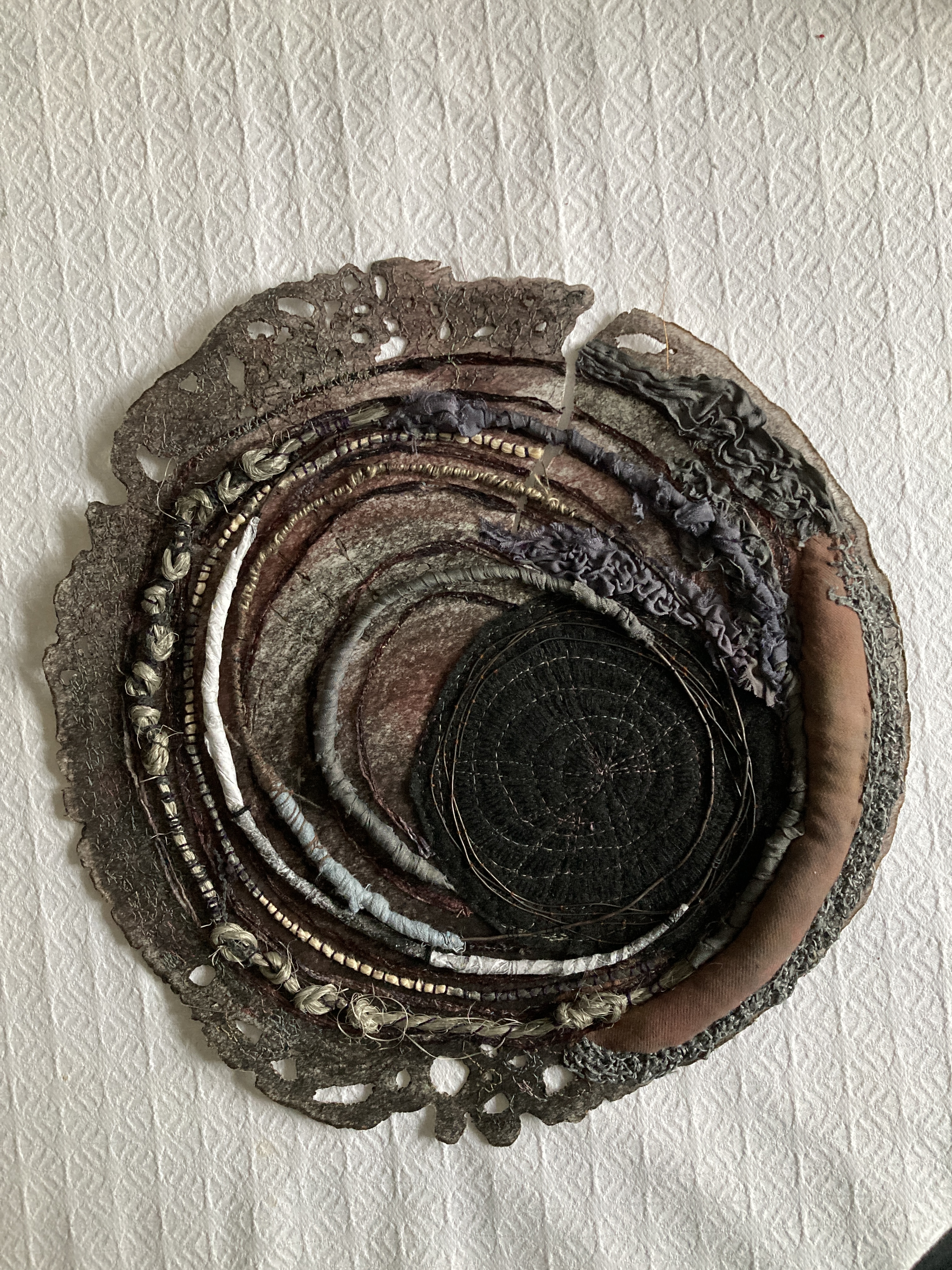
Surfaces may be raised by a variety of means. By layering up stitching, adding found objects, applying scraps of fabric. This course examines some of these methods to create a small piece of stitching that is heavily textured.
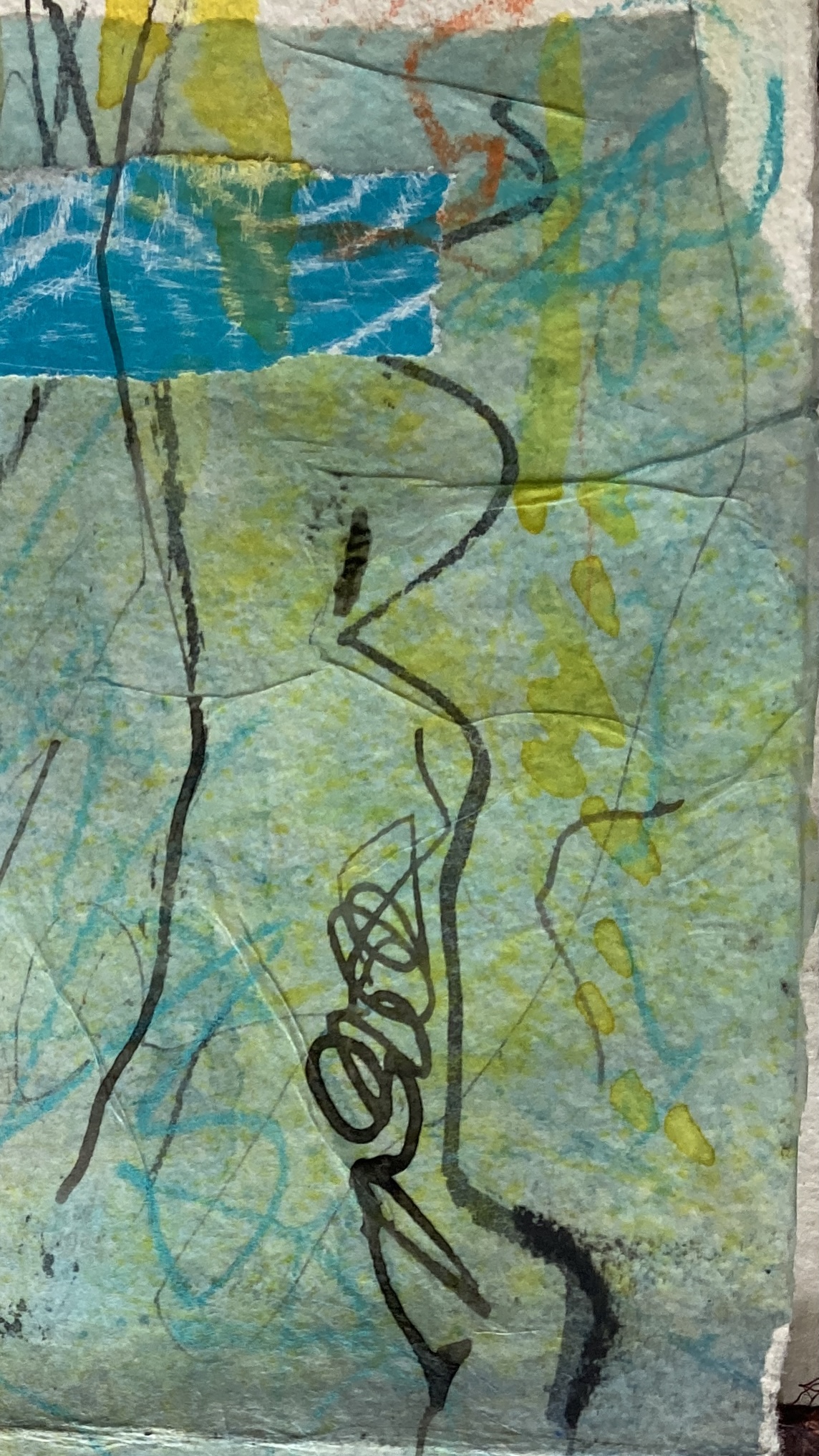
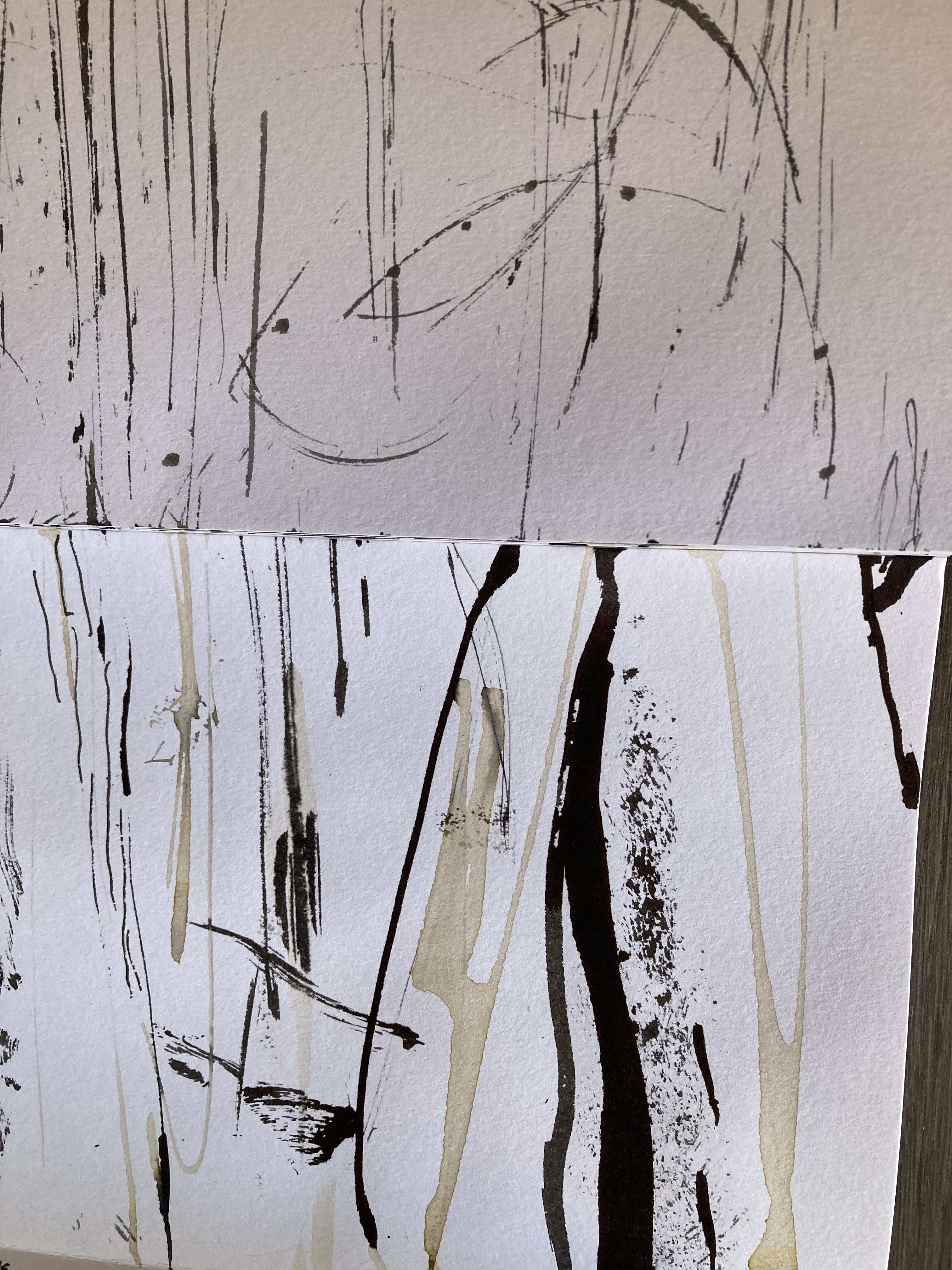
We will do some free mark making into a zig zag sketch book and select areas from the marks to interpret into stitch
We will use a range of tools to make spontaneous marks, exploring line, shape and colour. The surface will gradually develop into a rich patina that weill inspire small pieces of stitch. Students may personalise their zig zag book with their own chosen theme if they wish.
workshop at Missenden Abbey 13th – 15th August Hundertwasser was an austrian artist with an individual style; bright, intense colour and quirky images of line, spirals and eyes meandering around organic shapes. These characteristics together with an imaginary walk through familiar places will form the basis of spontaneous design to translate into a small piece…
Raising the surface. Wednesday March 12th Buckinghamshire Craft Group, Goat Farm , Aylesbury Surfaces may be raised by a variety of means. By layering up stitching, adding found objects, applying scraps of fabric. This course examines some of these methods to create a small piece of stitching that is heavily textured.
with added tea and walnut ink I have used natural fabric from the rag bag. Silk, cotton and linen work best. Image 1 shows some surface stitching onto the fabric. I wrapped up some rusted nuts and bolts into the fabric and bound them up in a bundle and left them in the dye jar…
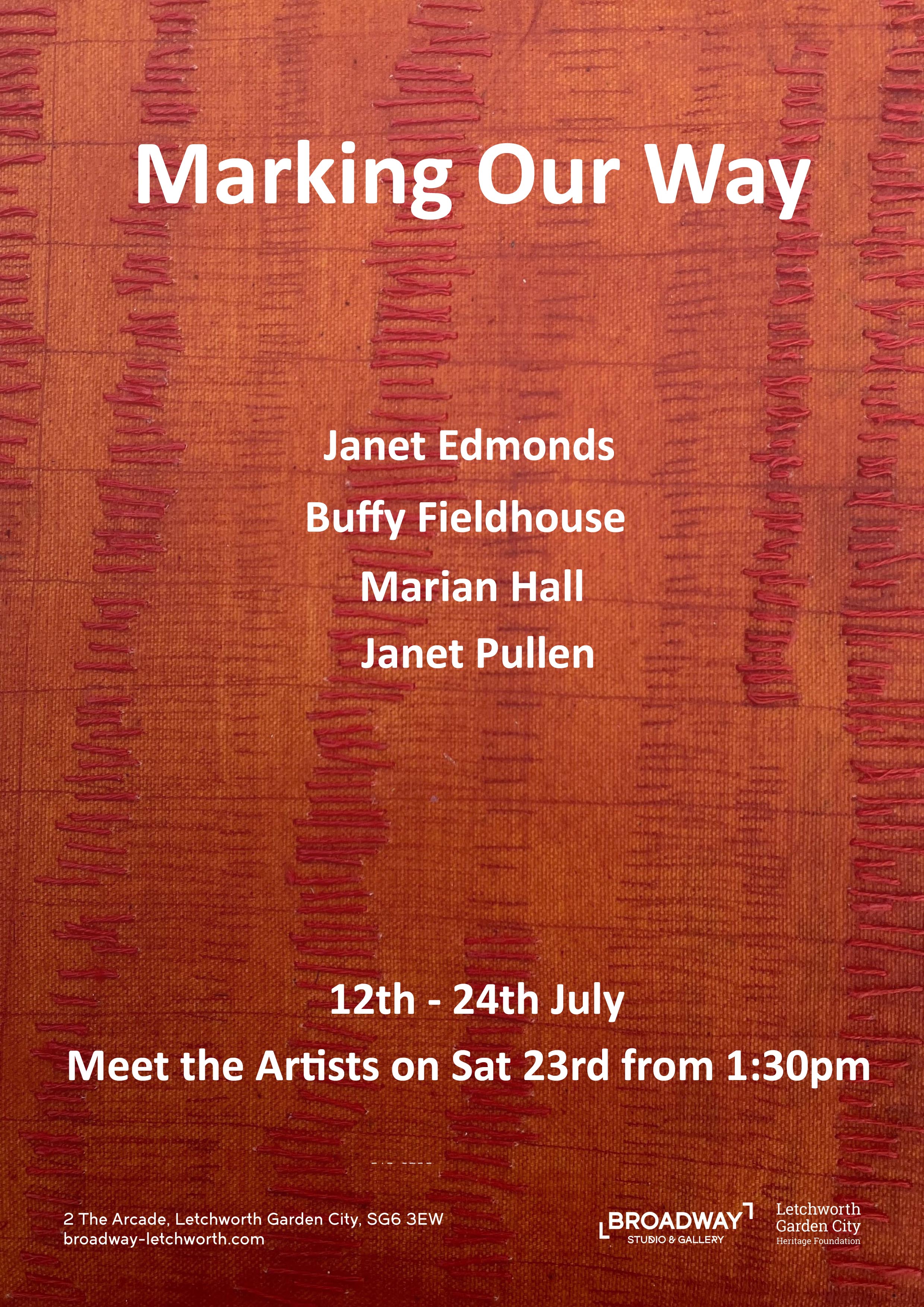
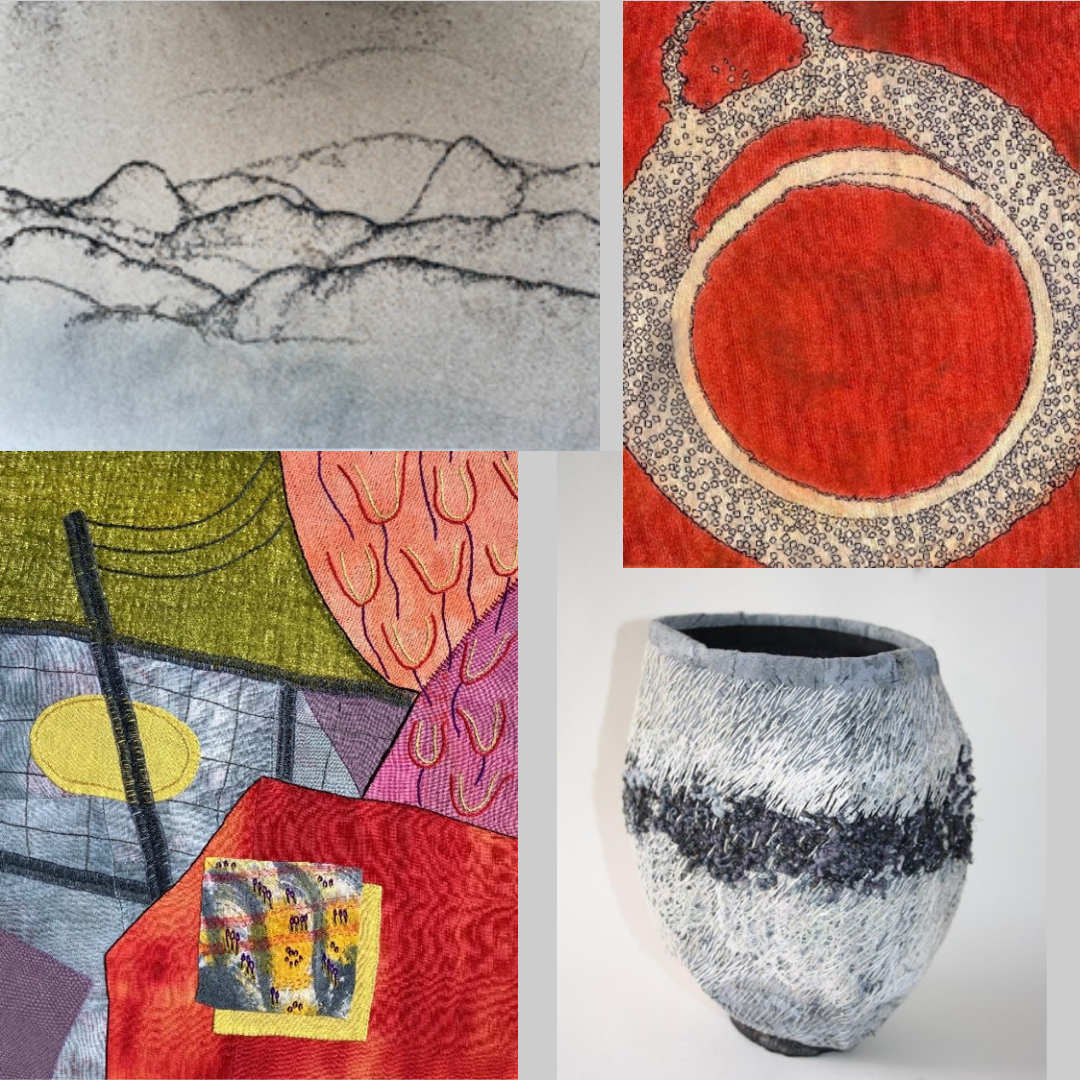
Marking our way is a body of work which four artists completed during the pandemic.
Inspired by creativity coach Rod Judkins, we each considered how we would design the cover of our fictional autobiography and the seeds of the project were sown. as the ideas for the book covers evolved, we started researching other artists who created overtly autographical work with which some personal connection was felt.
Spending more time at home presented an opportunity to take stock and throughtout this project we have reflected on the way we work, the work we made and the work we admire. Each has addressed the questions: Who am I? What do I do? What do I like? Why do I like them? How do I work?
Although we didn’t set out to write a book, we found the act of writing helped to clarify thoughts and to share them amongst ourselves.
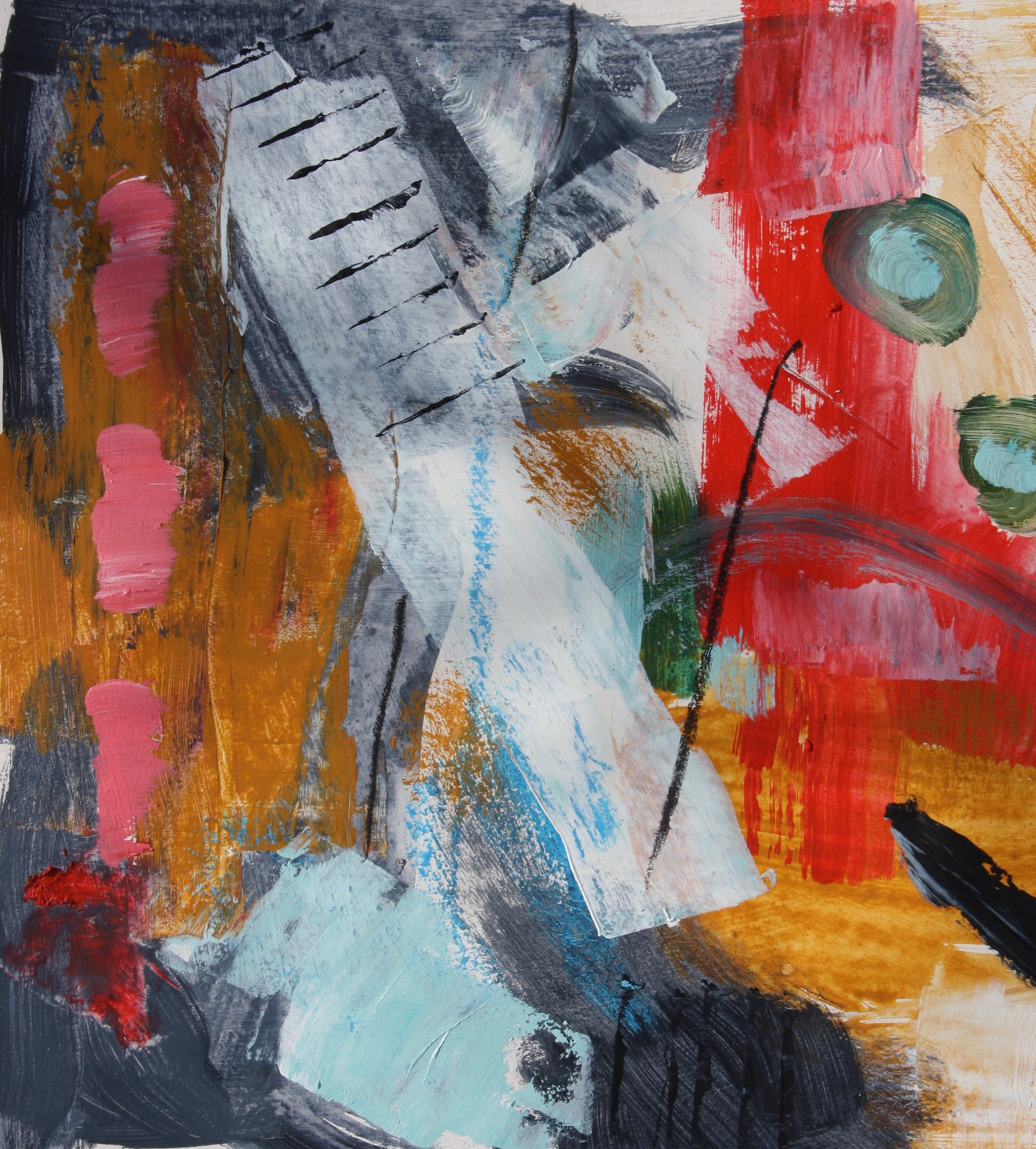
The use of line in design plays an important part in giving rhythm, direction, shape and style to a composition. this course explores these aspects and will provide lots of ideas and inspiration to develop and build confidence to express your ideas into fabric and thread.
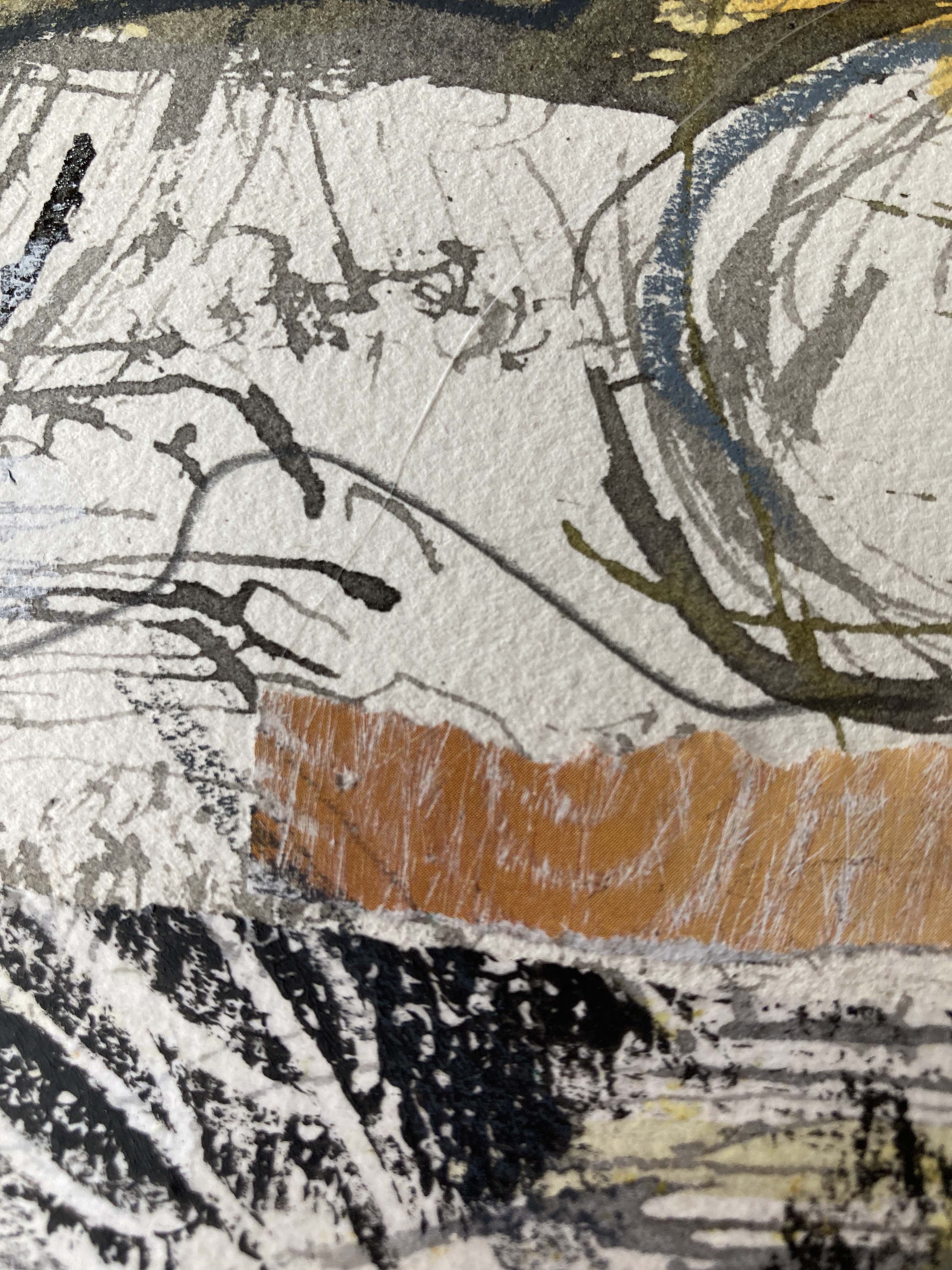
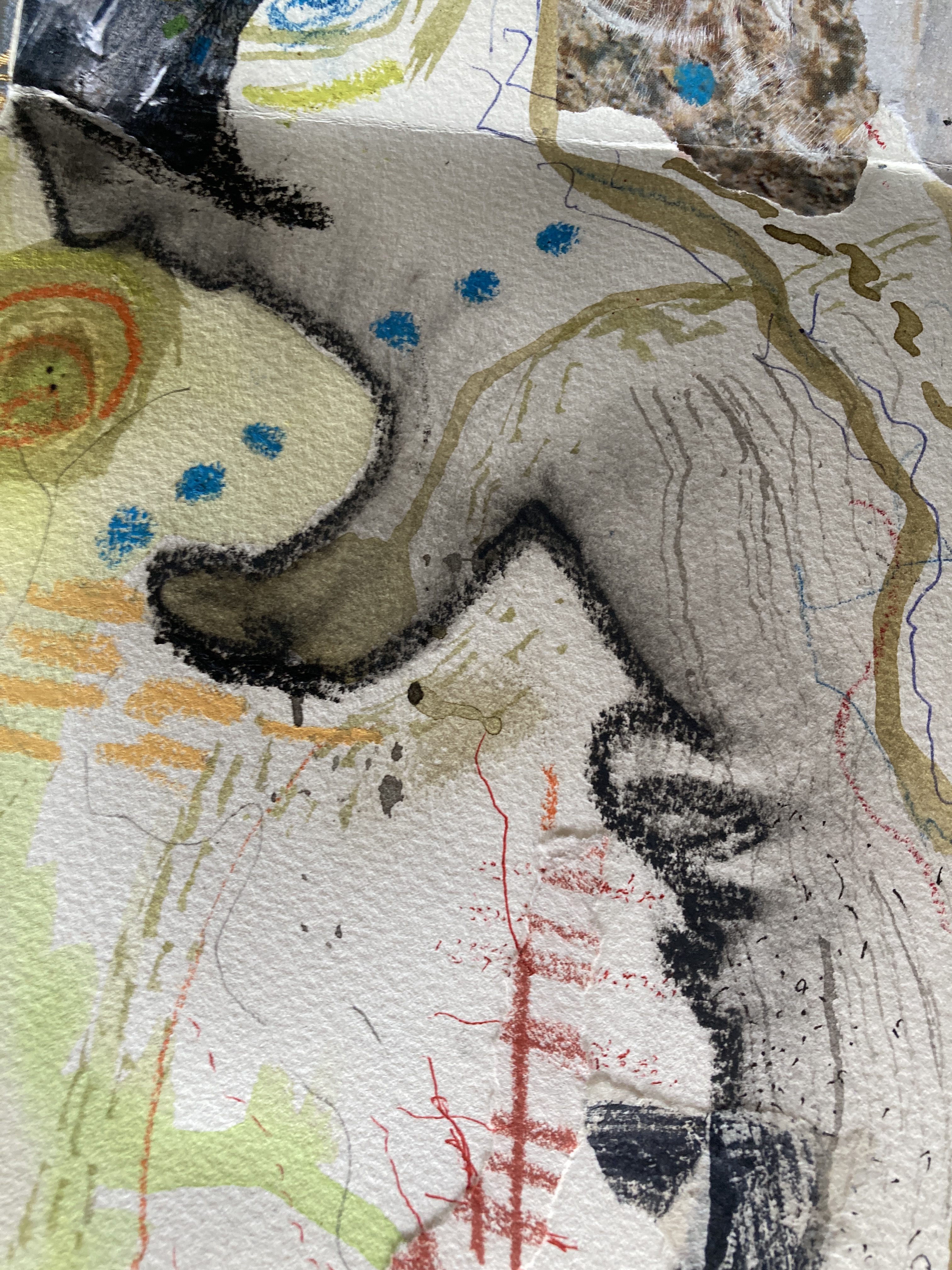
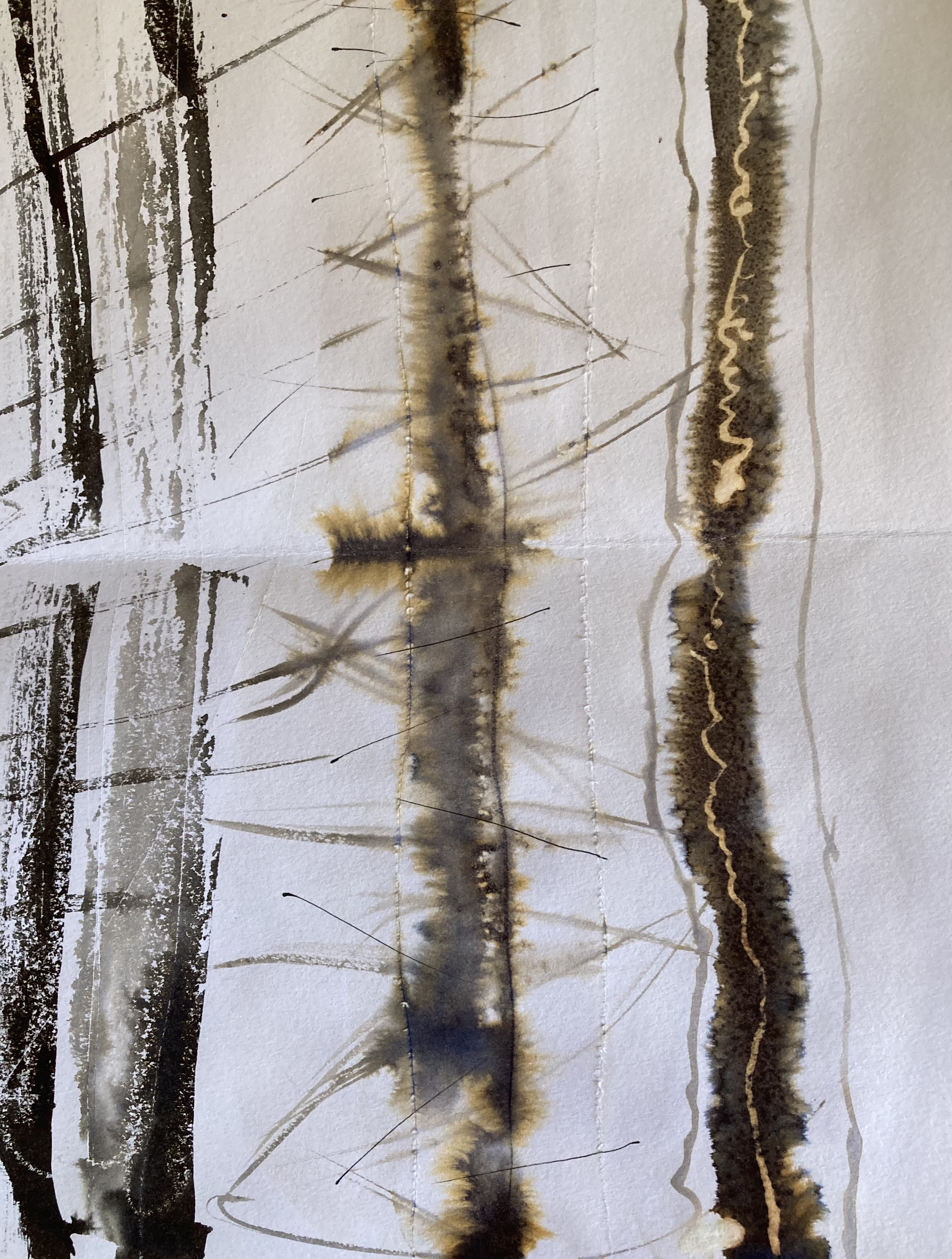
I will expand on the A1 painting I did yesterday. I used mainly black ink plus yellow and red. The red ink was a concentrated type and was very strong and not the colour I really wanted. I wet the paper in areas and and drew into the wet surface referencing the tree photos I had before me. The water spread the ink and gave me some nice mixes of colour. The concentrated red was much too strong so I drew over it with a brown Caron d’ache crayon to knock it back. I used some of the papers I had painted to create a collage based on a tree photo and made a raised surface. It needs more work but I need time to consider what. I worked into a couple of the pieces I did yesterday. There were a few visitors who showed interest in the work and it was good to consolidate my thinking as I had to explain my what I was doing.
This is a finished piece made earlier to show how I have interpreted the art work
I will be in residence at Unit 1 Layby Farm, Old Risborough Road, Stoke Mandeville, HP22 5XJ from 11th – 23rd October.
I will be working to the theme of TREES and making work from the photographs that I took as I walked the Outer Aylesbury Ring. I am interested in the many details to be found within trees. I like to draw tree bark, lichen, scars and snags on the bark, decaying matter and anything that gives me texture and the patina of decay and ageing. Drawings in the first instance will be translated into stitching. I intend to work mainly by hand but depending on how the work develops, I may decide to add machine stitching.
The residency will end with a workshop 0n Saturday 23rd October that will explore close observation of the marks left by the passing of time, of growth and weathered details on the surfaces of trees. the act of looking, considering and recording the infinite variety of detail will result in intensely worked surfaces on paper and fabric.









 Janet Edmonds